MEDICAL EDGE
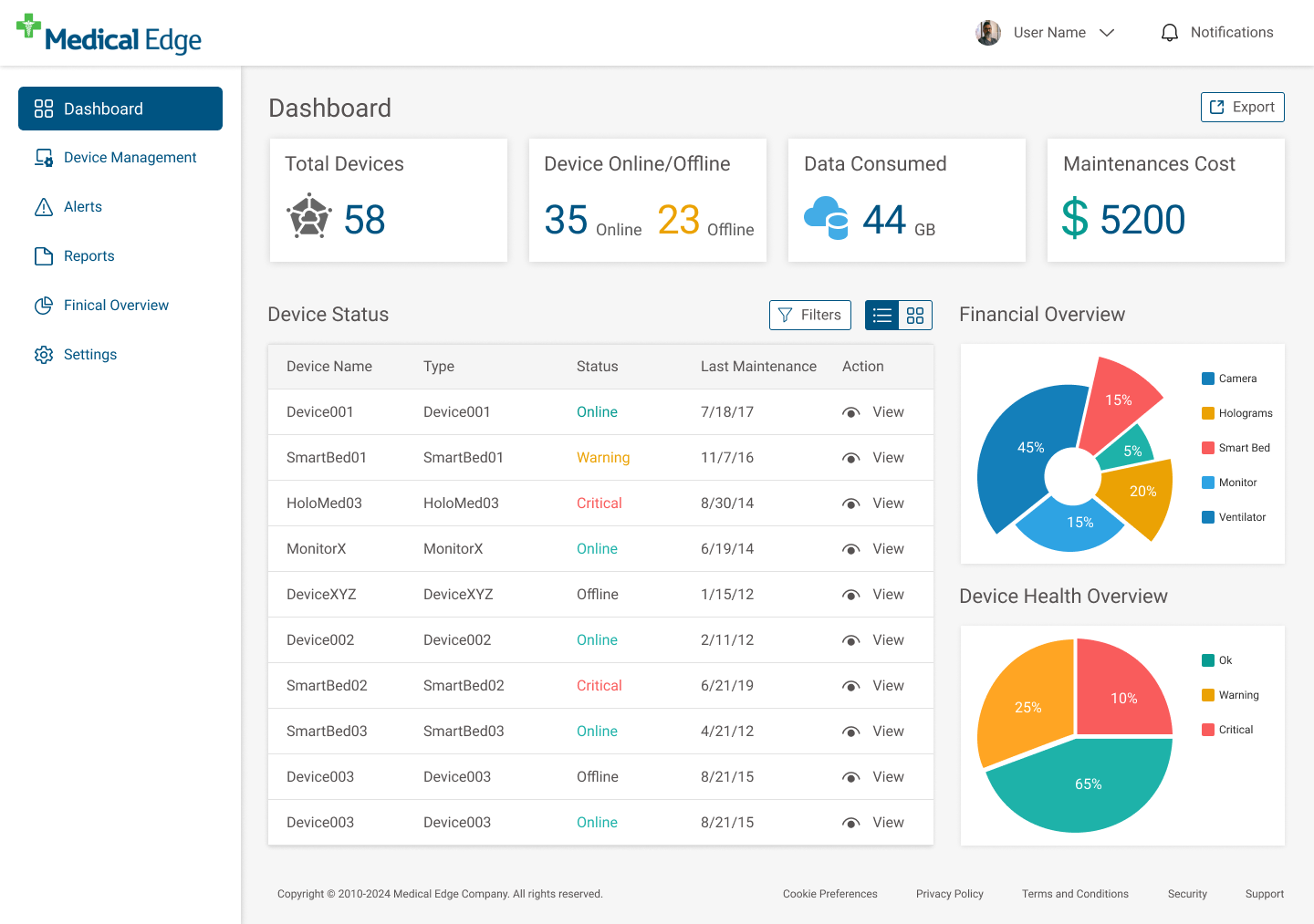
Medical Edge aims to develop a user-friendly operational dashboard for healthcare professionals to monitor and manage edge devices, ensuring real-time insights into performance, security, and financial metrics. Additionally, it provides a device journey for accessing specific camera devices, enabling live monitoring, report generation, alerts, security tracking, and data consumption analysis.
PROJECT OVERVIEW
The purpose of Medical edge is to develop a user-friendly operational dashboard that enables healthcare professionals to efficiently manage and monitor edge devices, such as medical IoT and monitoring devices. This dashboard will provide real-time insights into device health, performance, and financial data, ensuring seamless operation in medical environments. Additionally, the project aims to design a streamlined device journey for accessing specific camera devices, allowing users to view live feeds, generate reports, set alerts, track security metrics, and monitor data consumption.
MY ROLES & CONTRIBUTION
- User Research & Requirement Gathering – Understand healthcare professionals' needs, workflows, and pain points related to edge device management.
- Dashboard & Device Journey Design – Create wireframes, prototypes, and user flows for the operational dashboard and camera device journey, ensuring seamless navigation and usability.
- Accessibility & Usability Testing – Ensure the interface meets industry accessibility standards and is easy to use for a diverse range of users.
- Collaboration with Developers & Stakeholders – Work closely with engineers, product managers, and healthcare experts to align the design with technical feasibility and business goals.
- Iterative Design & Feedback Implementation – Conduct usability testing, gather feedback, and continuously improve the UX to enhance efficiency and user satisfaction.
BUSINESS CHALLENGE
Healthcare professionals need an efficient and intuitive system to monitor, manage, and analyze a large number of edge devices used in medical operations. The current workflows for accessing device performance, setting alerts, and generating reports are cumbersome, leading to delays in decision-making and increased effort in troubleshooting device-related issues.
- Inefficient Navigation:
Users struggle to locate specific devices or perform detailed tasks like viewing live feeds, generating reports, or analyzing data consumption due to poorly organized interfaces
- Delayed Issue Resolution:
Without streamlined access to device alerts and performance data, diagnosing and addressing device issues (e.g., downtime or security breaches) is time-consuming, risking delays in care.
- Scalability Challenges:
Managing a growing number of devices becomes overwhelming without advanced features like bulk actions, filtering, and sorting.
BUSINESS NEED
- Provide a High-Level Overview:
Enable quick insights into device health, performance, and critical metrics through a dashboard.
- Facilitate Detailed Device Management:
Offer a dedicated devices page for in-depth analysis, configuration, and troubleshooting.
- Enhance Navigation:
Ensure seamless access to device details, live feeds, reports, and alerts using clear and intuitive navigation.
- Increase Efficiency:
Include features like filtering, sorting, and bulk actions to simplify managing large datasets.
- Support Proactive Decision-Making:
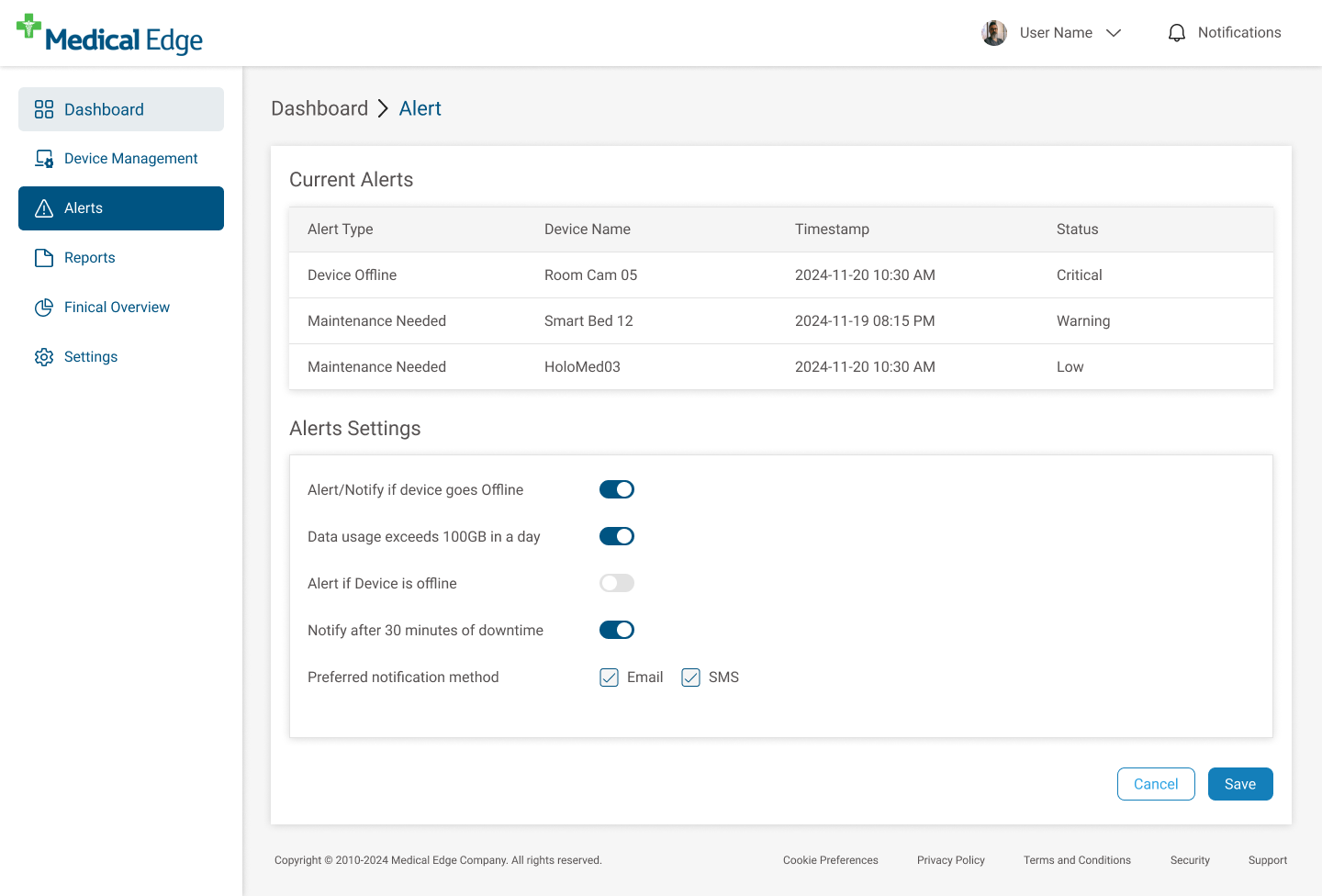
Enable users to set up alerts and monitor security metrics to address issues in real time.
- Streamline Reporting:
Provide tools to easily generate, export, and share performance and usage reports.
THOUGHT PROCESS
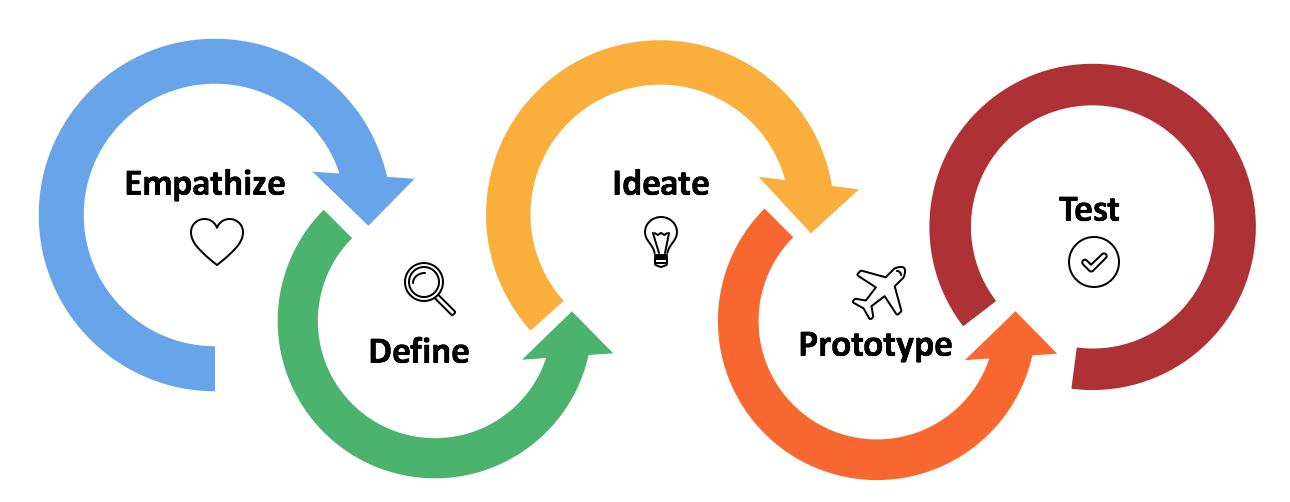
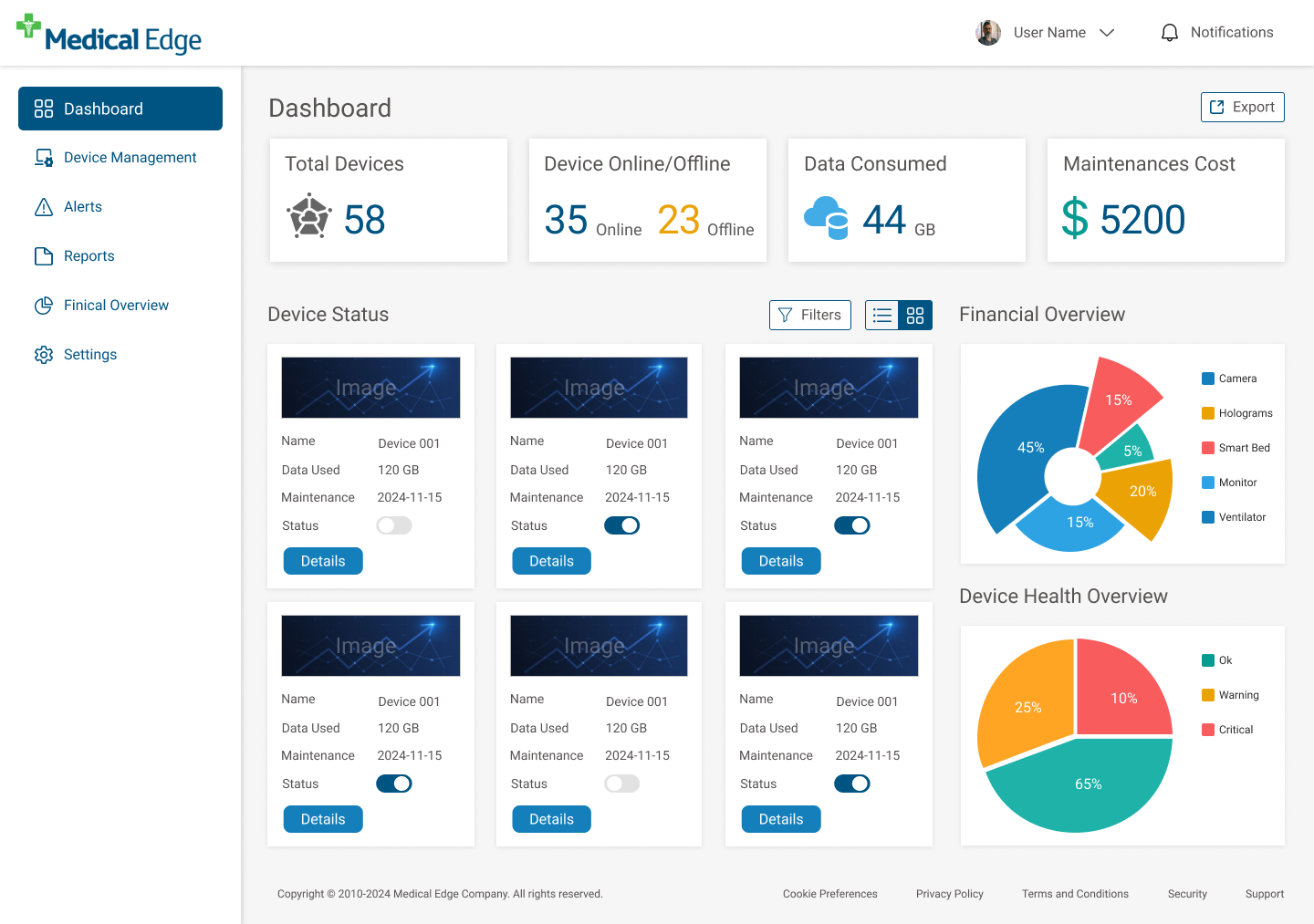
To solve the user story, I followed a user-centric approach, focusing on healthcare professionals' needs for monitoring and managing devices. I separated data into summary-level insights for the dashboard and detailed attributes for the devices page to ensure relevance.
Navigation was designed to be intuitive, with the sidebar for broader categories and in-table actions for deeper functionality.
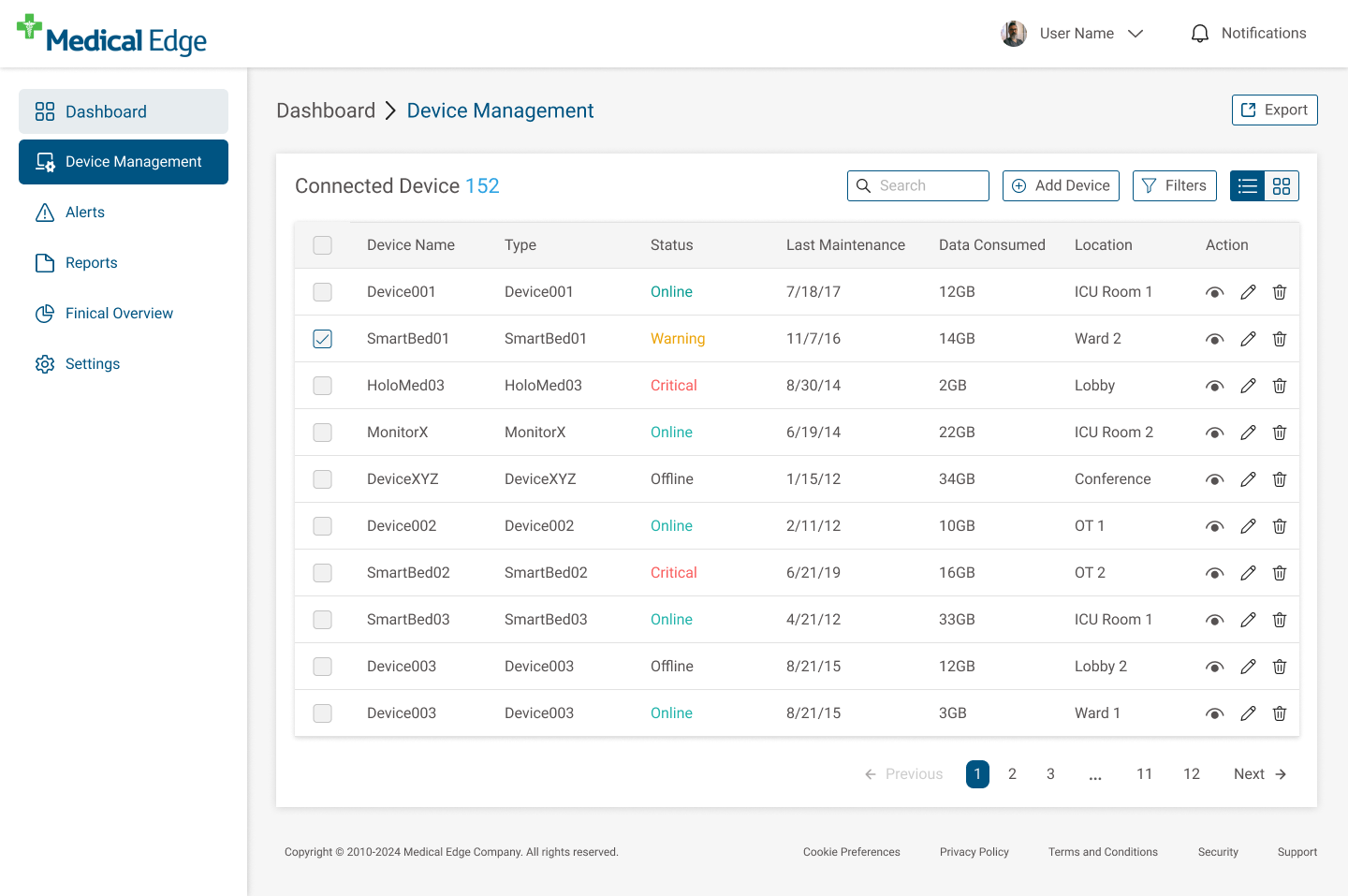
Features like filtering, sorting, and bulk actions enhance efficiency, especially for large device lists. Scalability was ensured with pagination and export options for managing extensive datasets.
Our focus was on clarity, efficiency, and supporting both quick monitoring and detailed management workflows.
CORE FEATURES OF THE DESIGN PLATFORM
Dashboard Summary:
- High-level KPIs for device health, uptime, and maintenance costs.
- A table showcasing the top devices with critical statuses.
Devices Page:
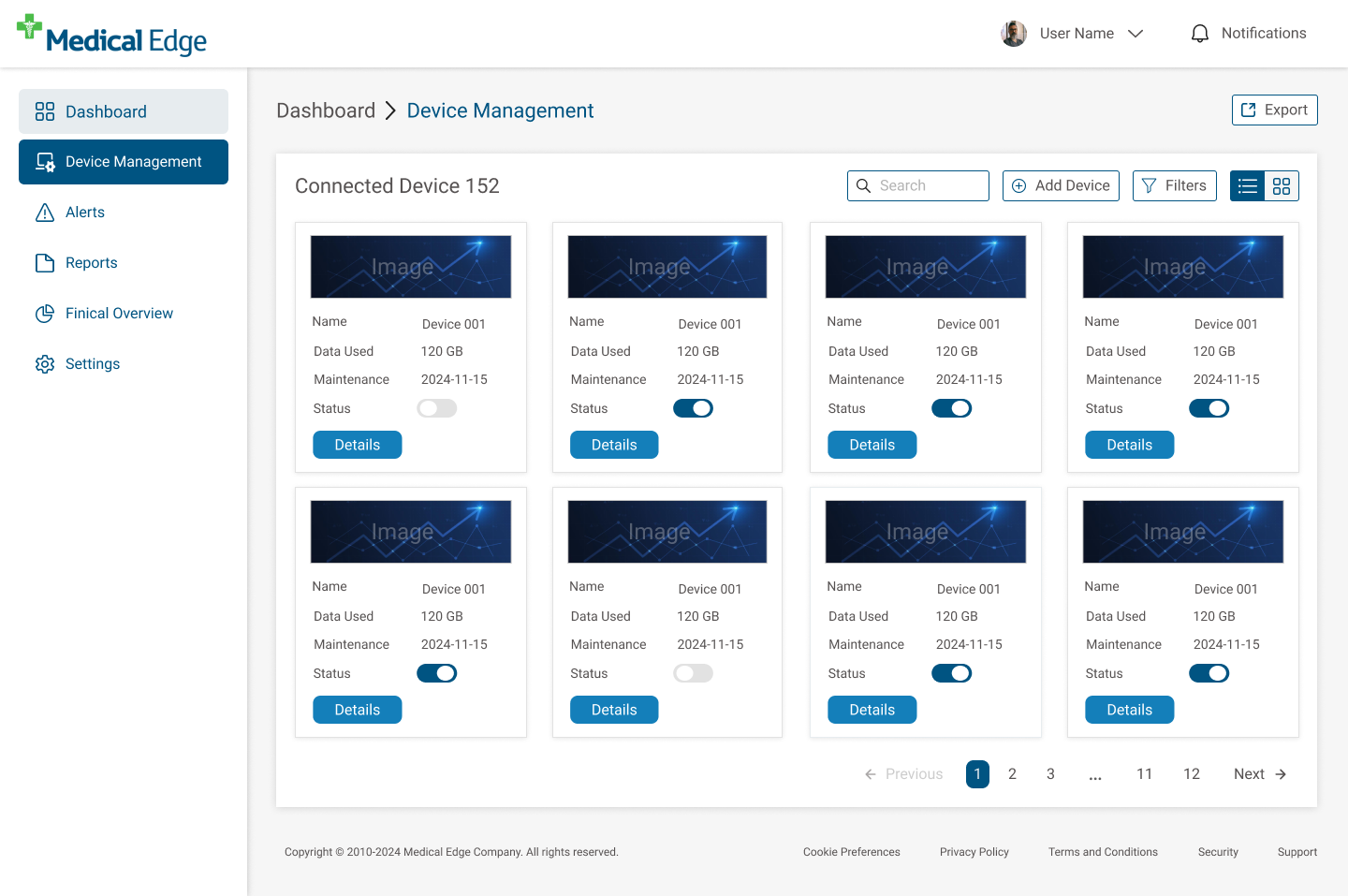
- Comprehensive list of all devices with detailed attributes (e.g., location, data consumption).
- Filtering, sorting, and search options for easy management.
Device Details:
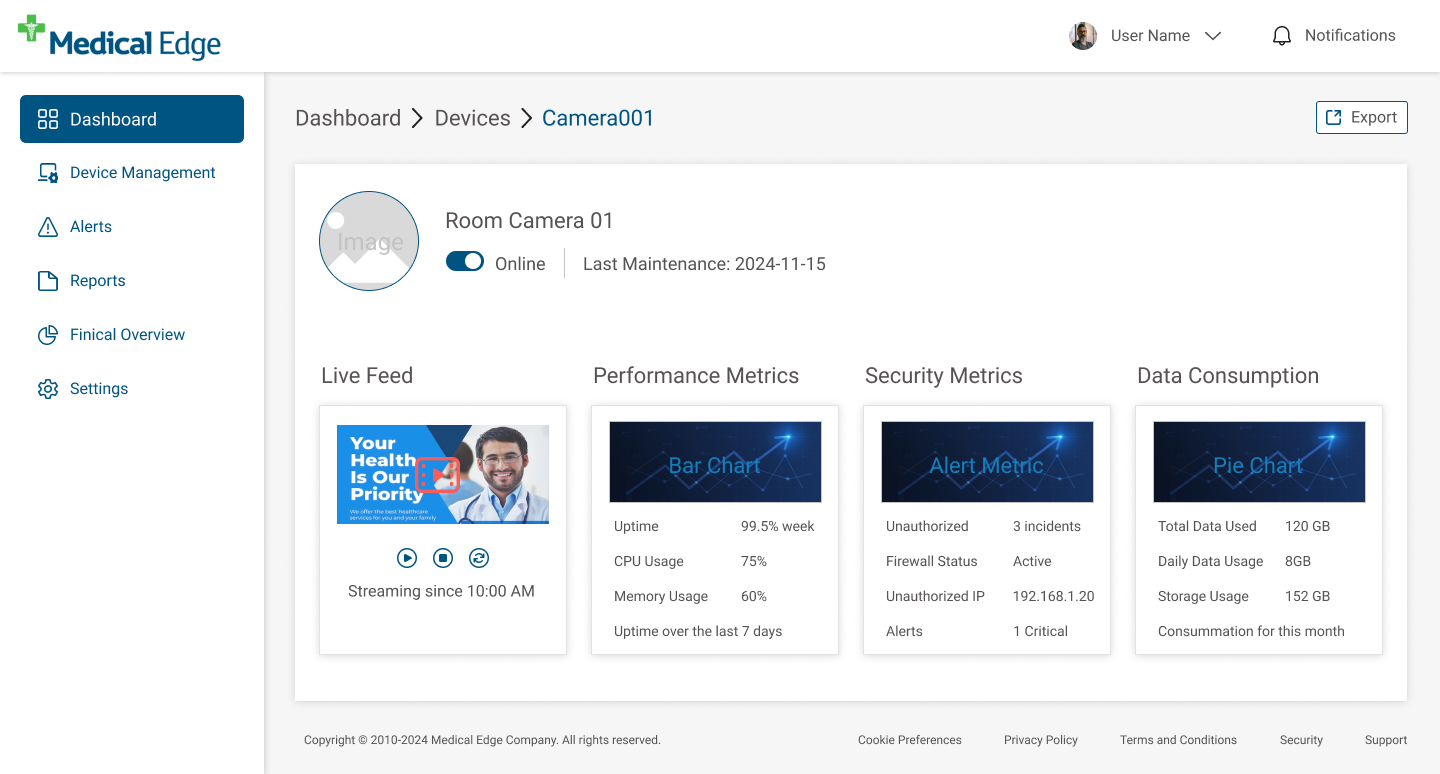
- Access live feeds, performance metrics, security logs, and data usage.
- Generate detailed reports and set alerts for critical events.
Actions & Navigation:
- Intuitive navigation through sidebar categories and in-table quick actions.
- Bulk operations for efficiency, like assigning technicians or exporting data.
Scalability & Efficiency:
- Pagination for large datasets and export options for offline reporting.
- Interactive graphs and logs for better data visualization.
These features ensure a seamless experience for quick monitoring and in-depth device management.
USER PERSONA
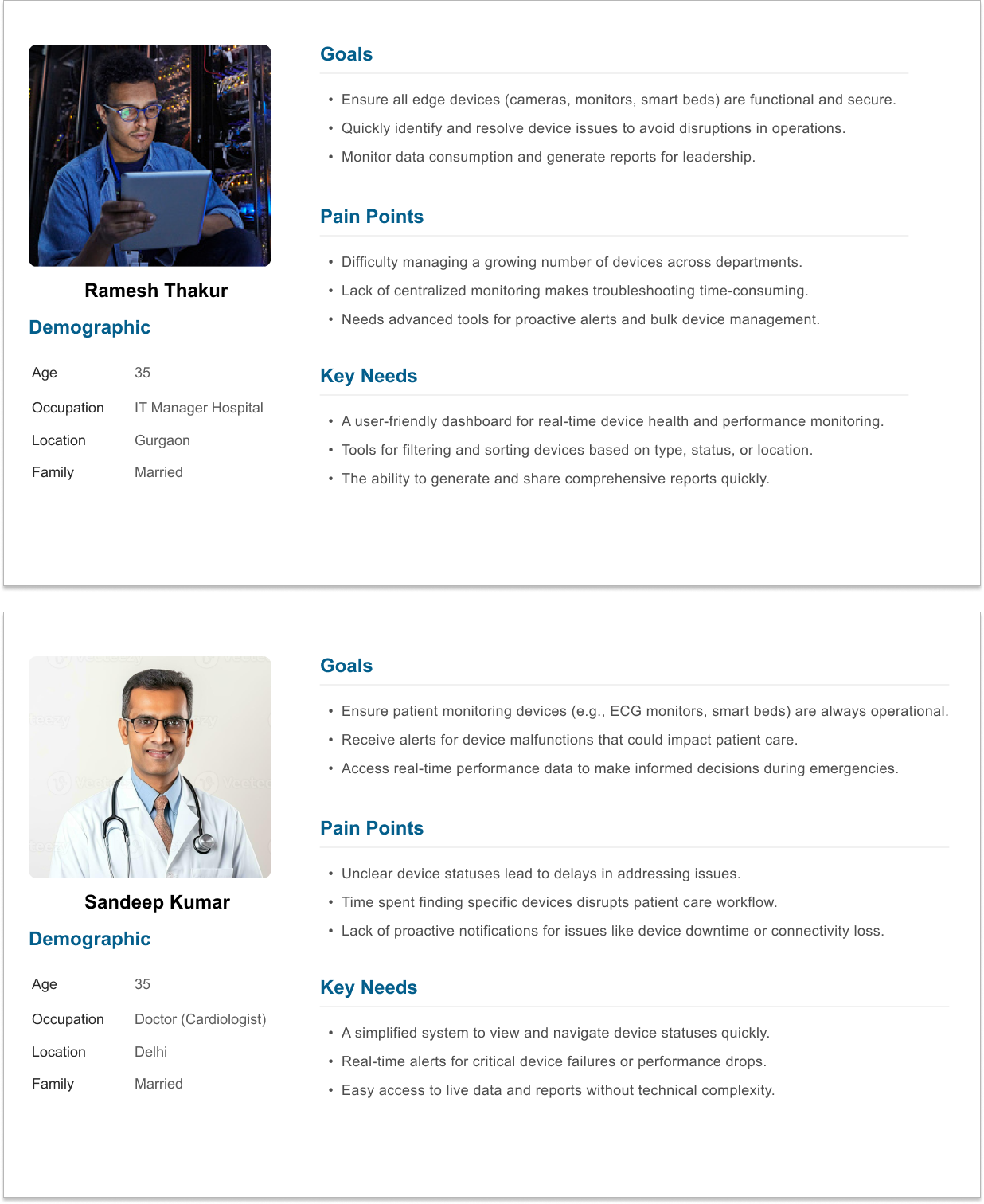
User Personas represent sub groups of the the target audience. The two key personas for which product could be applicable for would be Site Admin and Doctor.
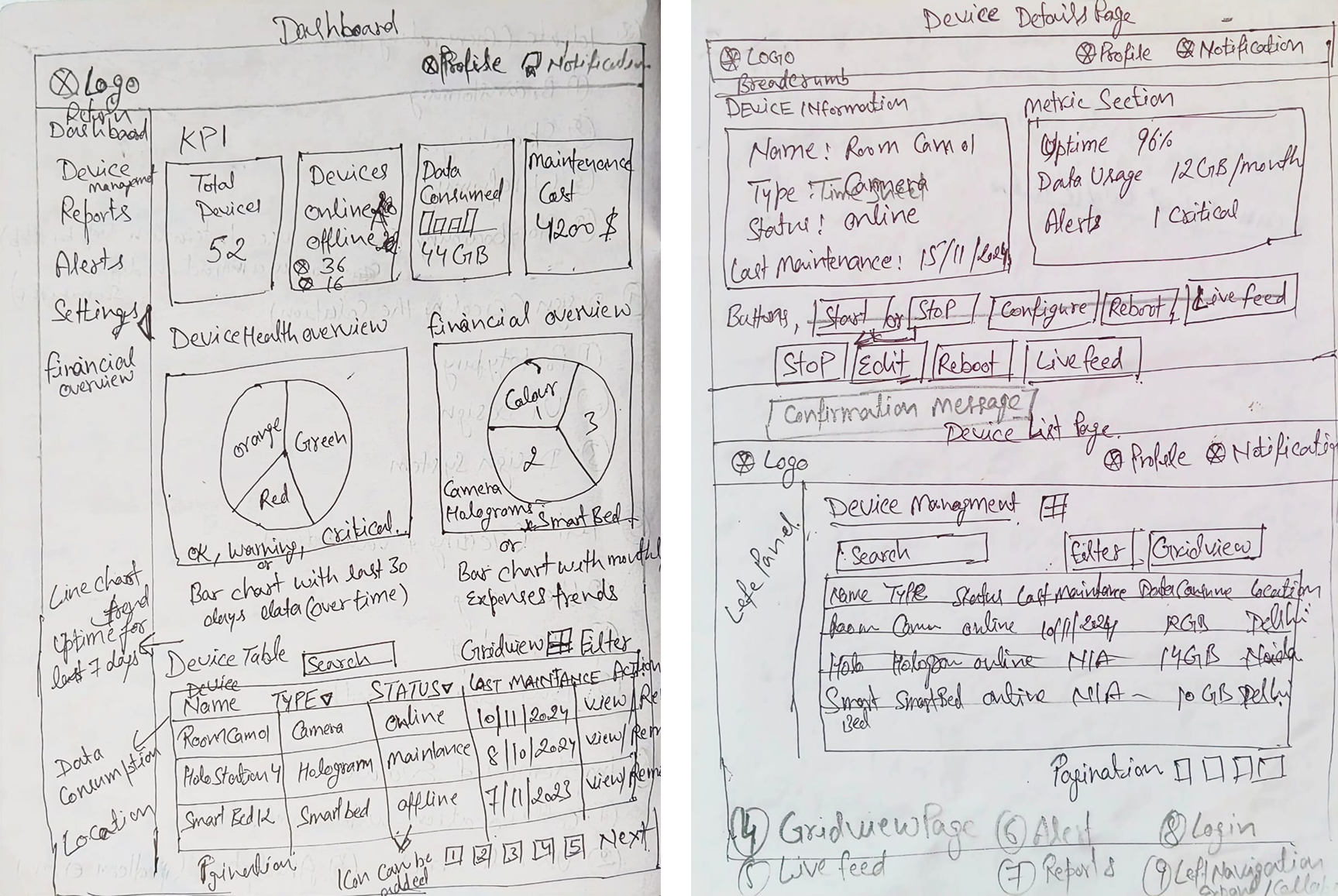
BRAINSTORMING PAPER SKETCH
SOLUTION RANDOM SCREEN SHOT

TECH STACK
- Figma – For wireframing, UI design, and prototyping.
- FigJam – For brainstorming, user flows, and journey mapping.
- Jira – For tracking tasks, sprints, and UX-related issues.
- Confluence – For documentation and design guidelines.
- UserTesting – For usability testing and feedback.
Figma Prototype and Design System link
SUCCESS STORY
Our team collaborated with healthcare professionals and product owners to design an intuitive operational dashboard and device journey for managing edge devices. Initially, a design agency was involved, but after a brief study of the requirements, we proposed enhanced UX concepts, which were well received by stakeholders.
Taking full ownership of the UI/UX strategy, we conducted user research, interviews, and testing to ensure a seamless experience. Working closely with product owners and developers, we refined the interaction and visual design, ensuring smooth implementation and launch. The project received high praise for its usability, efficiency, and innovation.
- One unified design system – Fully responsive across all devices.
- Scalable & user-friendly interface – Optimized for healthcare professionals.
- Seamless interactions & smooth transitions – Enhancing user experience.
- Secure & globally accessible – Ensuring reliability in medical environments.
This project significantly improved device management, monitoring, and decision-making for healthcare professionals, reinforcing our commitment to user-centric design.